
Mapping Textile Regions and Experiences That Matter
As we saw in Part 1, today’s traveller no longer seeks just the ‘what,’ but the ‘how’ and ‘why’ behind heritage. If heritage is the soul of textile tourism, its regions and communities are the warp and weft, the threads that bind intention to experience. India’s craftscape is among the richest in the world, not simply for its techniques, but because each region’s textile language reflects landscape, ritual, migration, and resistance.
Experience India’s textile traditions – one of the most appreciated traditions in India. Meet some fine craftsmen and connect with stories that have kept these traditions alive since the 15th century. Get set for an experience worth a thousand words.
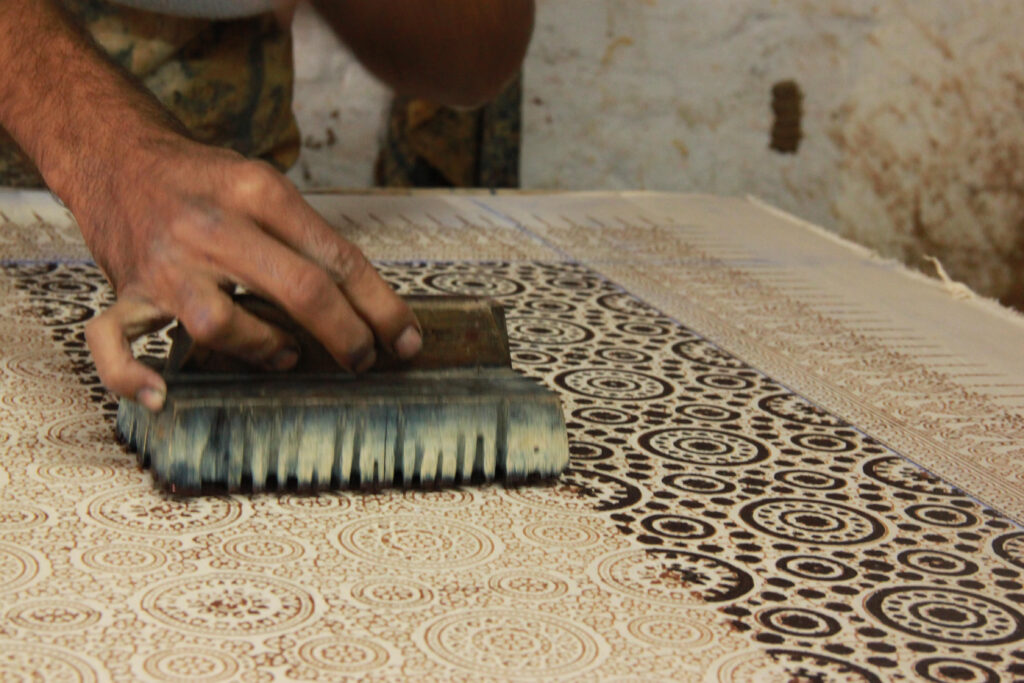
Take Gujarat / Kutch. Its craft economy is a treasure trove: Ajrakh printers, Bandhani tie-dyers, Mashru weavers, tribal embroidery artisans, and leather craftspeople. In Ajrakhpur, sit with a printer and hear the thump of wooden blocks on a damp cloth . Move to Bhujodi, where a fifth-generation weaver speaks of extra weft with as much pride as his ancestors did. Collectives like Khamir , Qasab and Shrujan, the force behind the LLDC Museum, help mediate these moments—not as handlers, but as cultural stewards.
In Varanasi, the tone shifts: a textile trail might begin in a 17th-century atelier where Kadwa and Tanchoi are still woven on pit looms from memory. But stopping there misses the deeper story: pink meenakari enamel craftsmen, a few left, and wooden toy makers and soapstone carvers shape the city’s feel. In Dal Mandi’s courtesans’ streets or at dye yards by Pili Kothi, it’s clear: this is not a city of monuments—it’s a city of makers.
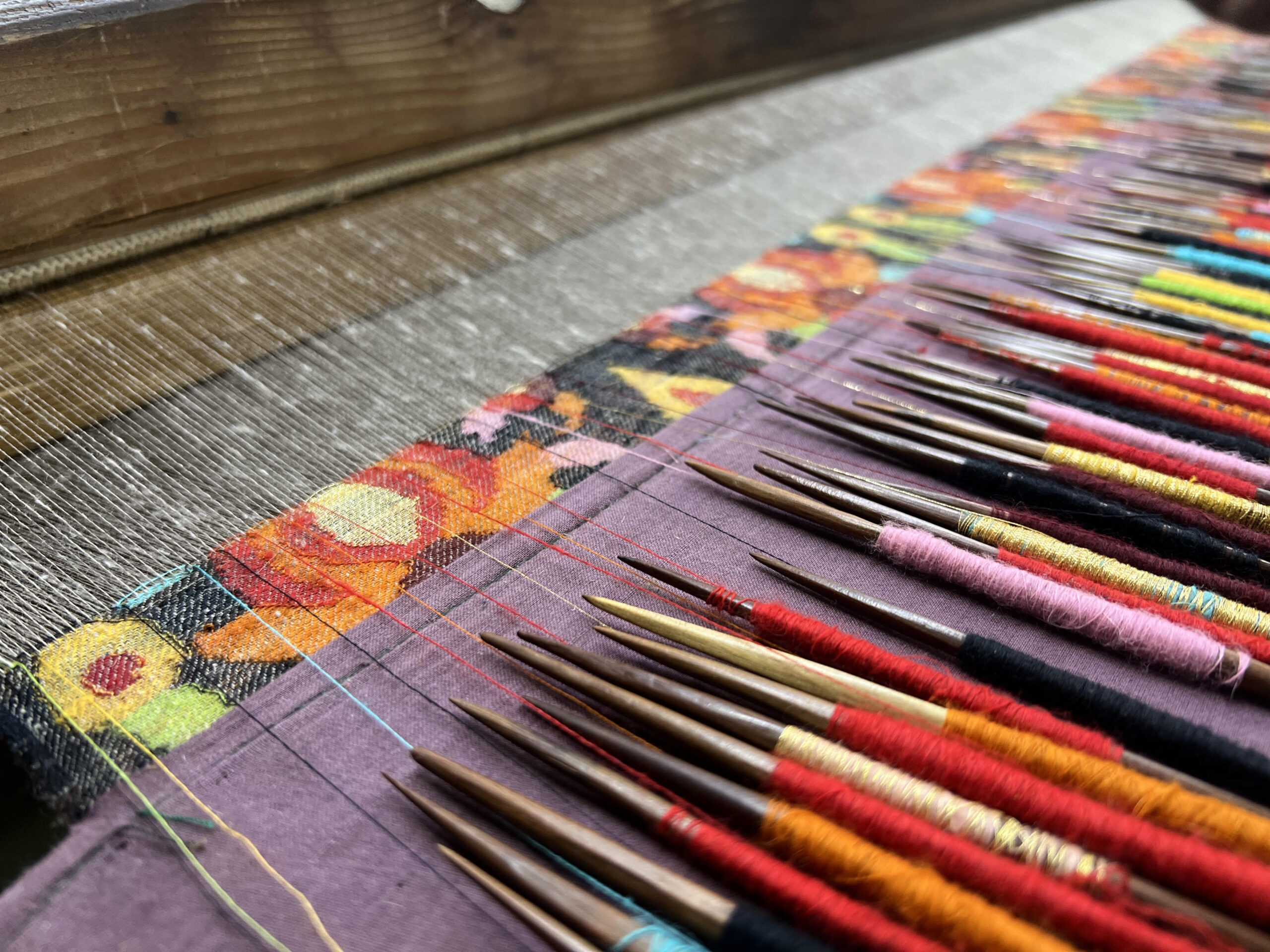
Kashmir, in contrast, carries a rhythm both meditative and measured. Here, Pashmina isn’t a keepsake—it’s devotion spun. Watch a Kani weaver work with dozens of coloured bobbins, guided only by a coded pattern his fingers have memorised. Add to this a shikara ride across Nigeen Lake or an evening of live Sufiyana Kalaam, and memory begins to embed itself in all five senses… and we’re not even talking about how a traveller experiences culture through India’s diverse cuisines.
Let’s turn to Bengal, where immersion takes on another texture. Textiles here unfold through memory, migration, and artistic exchange. In Kolkata, conversations about the revival of Baluchari, Kantha, and the globally acclaimed Jamdani open up the region’s design vocabulary. From the looms of Phulia to Shantiniketan’s artistic energy and Murshidabad’s silk heritage, this journey shows how textile traditions are woven closely with Bengal’s literature, landscape, food, and cultivated cultural sensibility.
Audience segmentation is essential. For example, first-time visitors drawn by aesthetics may be satisfied with a teaser trailer. Textile scholars or collectors are likely to seek in-depth engagement with textile archives and explore off-grid ateliers. Designers and buyers, on the other hand, arrive with specific questions and a clear need to meet potential business partners. Each audience group requires a tailored approach, with a focus on intention, quality, and production in line with their respective specifications.
It’s evident that this approach cannot be scaled through a cookie-cutter ‘one shoe fits all’ lens. Craft communities are intimate ecosystems. The best itineraries are quietly immersive, protect cultural bandwidth, and honour the slowness inherent in any hand-made process. Overexposure can turn living heritage into ‘ staged performances’, and as industry practitioners, we must resist the temptation to over-curate.
For trade, the opportunity lies not just in logistics but in collaborative, considered curation. That means partnering with domain experts who understand the emotional geometry of these journeys. Because what they’re offering is not just access. It’s perspective.
And when a traveller returns home with not just a shawl, but a story—they carry not just memory, but responsibility.
In Part 3, we’ll explore what that responsibility means for artisans and the trade as a whole.— craft, consciousness, and the future of textile travel.
Written by Shilpa Sharma
A craft evangelist and creative entrepreneur, Shilpa Sharma is passionate about cultural preservation, creative entrepreneurship and immersive travel. With a career spanning over 35 years, Shilpa Sharma has worked at the intersection of culture, craft, and travel.