
Samode Palace
There are palaces in Rajasthan that impress. And then there are those that linger. Samode Palace belongs firmly to the latter. Tucked into the folds of the Aravalli hills, just beyond Jaipur, it does not announce itself with spectacle. Instead, it reveals itself gradually, as though aware that true romance is best experienced in layers.
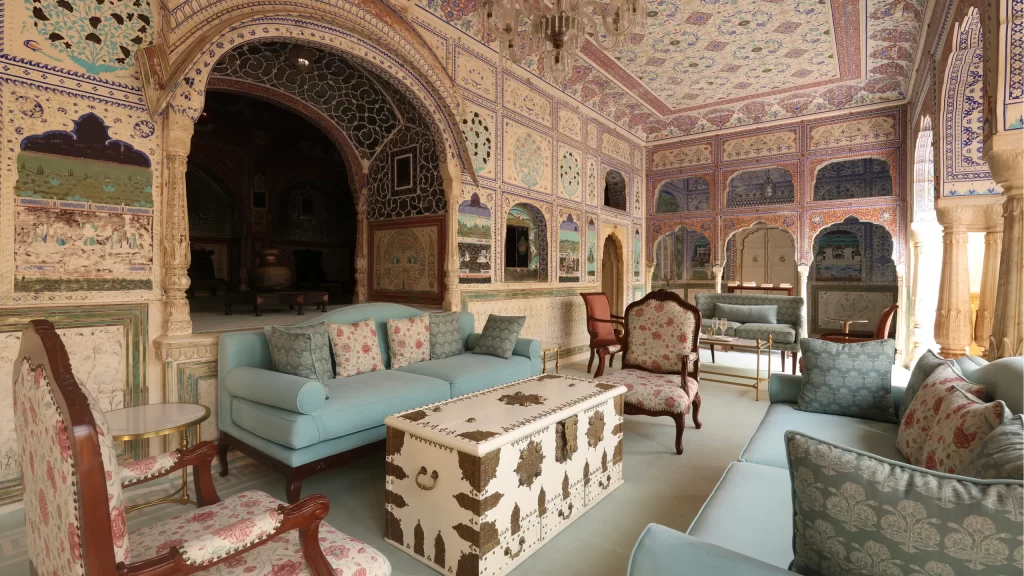
The origins of Samode date back over four centuries, yet the palace remains remarkably intact in spirit. Its architecture is a study in restraint and embellishment held in delicate balance. Frescoed walls bloom with intricate detail, mirror work catches light with quiet precision, and courtyards unfold one after the other like carefully composed scenes.
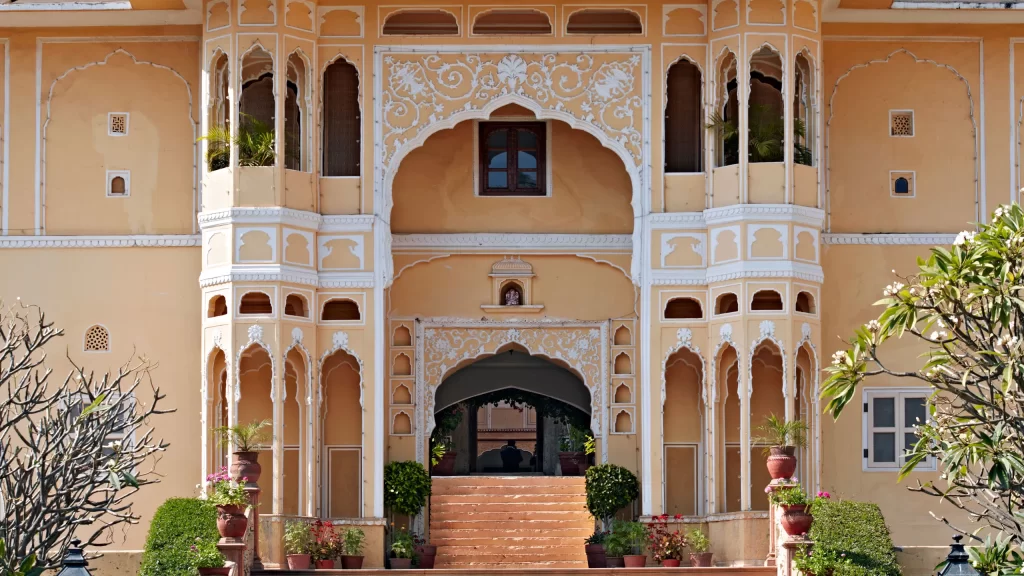
What distinguishes Samode, however, is not merely its aesthetic richness, but its sense of inhabitation. This is not a relic preserved behind velvet ropes. It is a lived-in space, where heritage is neither staged nor diluted.
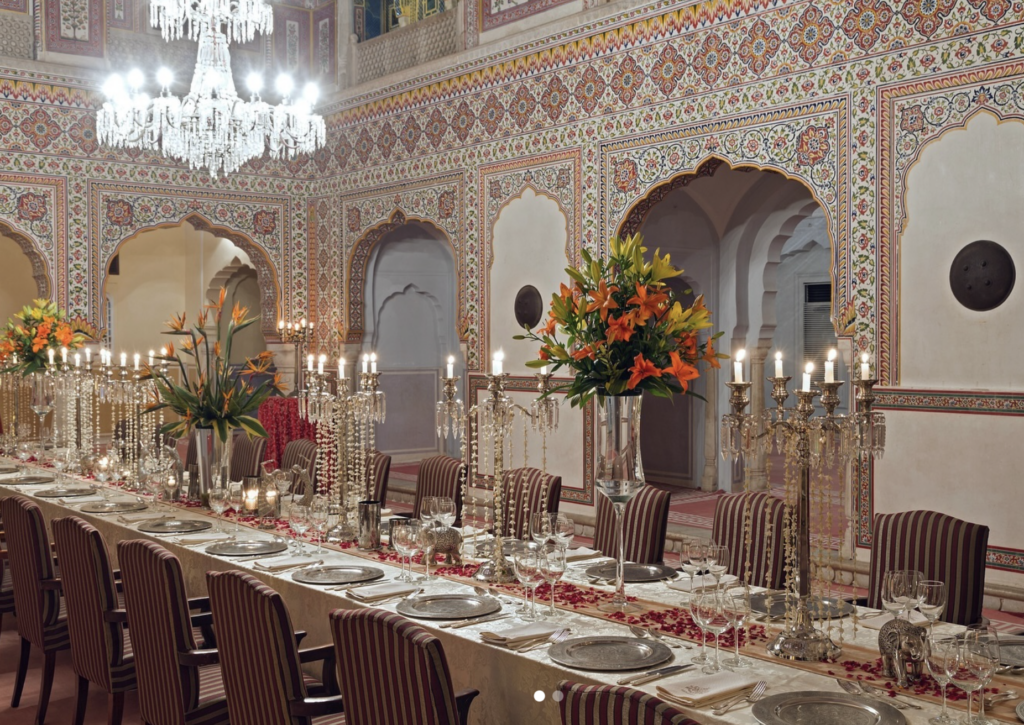
One senses this most keenly in the Durbar Hall, where hand-painted panels and gilded ornamentation evoke a time when craftsmanship was both devotion and display. Yet the atmosphere remains intimate rather than overwhelming, inviting contemplation rather than admiration alone.
Beyond the palace walls, Rajasthan continues its quiet performance. The desert light shifts almost imperceptibly across the hills, and evenings settle into a rhythm that feels unhurried, almost conspiratorial in its calm.
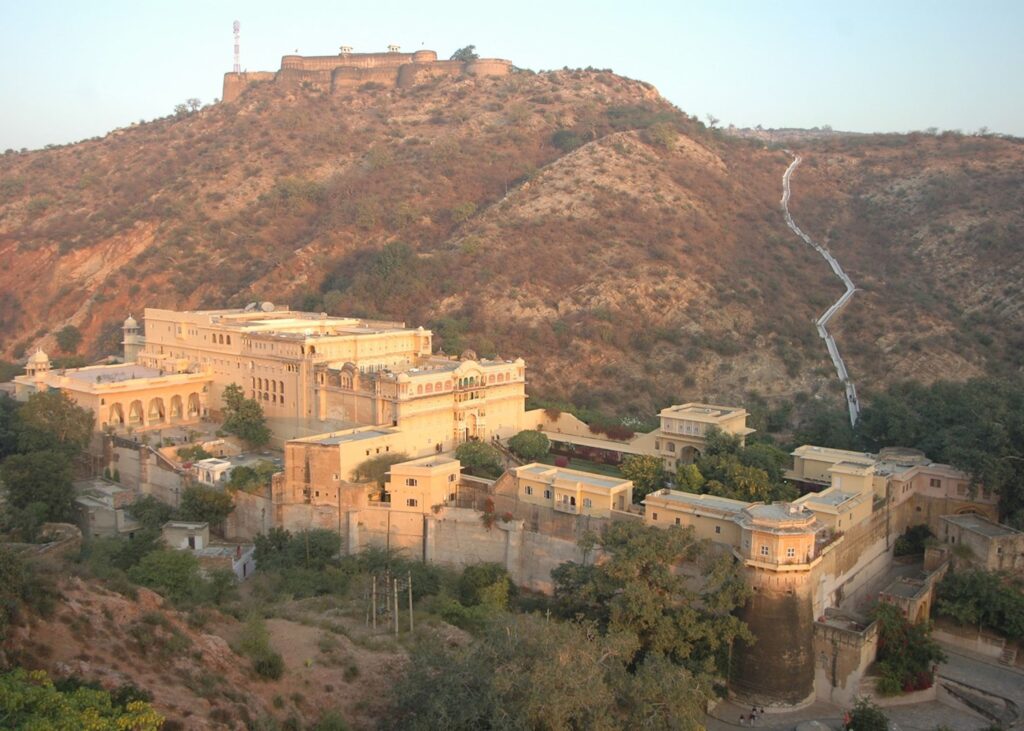
To stay at Samode Palace is to encounter Rajasthan not as a postcard, but as a mood. It is a reminder that romance, in its truest sense, lies not in grandeur alone, but in the details that reveal themselves slowly, and linger long after.